Impact Damage Fixed at Vehicle Ends
Bumper Repair & Replacement in Tuscaloosa for Cracks, Scratches, and Impact Deformation on Front and Rear Assemblies
Cracked plastic bumpers, scraped covers from curb contact, and impact damage from low-speed collisions all affect the protective assemblies at vehicle ends. Bumper repair in Tuscaloosa addresses damage through plastic welding for cracks, heat reshaping for deformed sections, and complete replacement when breaks span mounting points or when internal reinforcement structures have failed. Kirkman's Auto Body & Collision evaluates whether damaged bumpers retain their impact-absorbing function or whether structural compromise requires installing new assemblies to maintain crash protection standards.
Modern bumpers consist of a painted plastic cover over foam energy absorbers and metal or composite reinforcement bars, with sensors, cameras, and lighting integrated into many assemblies. Crack repair using plastic welding works when breaks are clean and haven't shattered the surrounding material, allowing technicians to fuse the separated sections and reinforce from behind before refinishing. Paint matching follows the same color formulation process used for body panels, ensuring repaired bumpers blend with adjacent fenders and doors.
Schedule a bumper inspection to determine whether repair or replacement best addresses your vehicle's specific damage pattern.
What Proper Bumper Work Requires
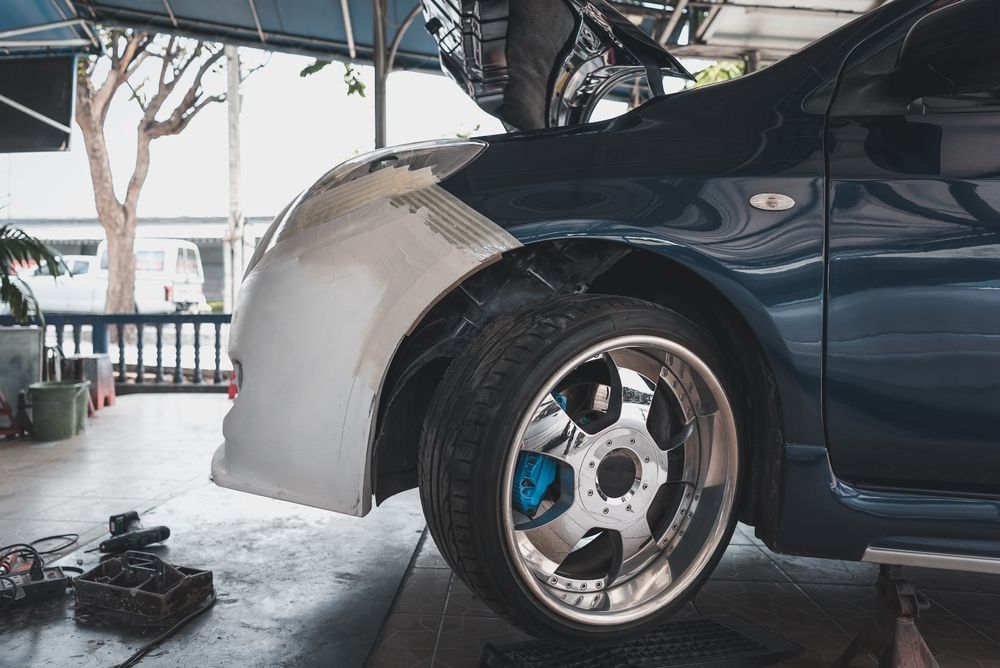
Plastic welding involves using a hot air tool and filler rod made from the same polymer as the bumper, melting both the filler and base material so they fuse chemically rather than just adhering with glue. Reinforcement mesh gets embedded across the crack on the backside for strength, then the outer surface gets ground smooth, filled, and sanded to recreate the bumper's original contour. This approach costs considerably less than replacement while maintaining structural integrity when the damage is localized and the plastic hasn't become brittle from age or UV exposure.
After repair work finishes, you'll find that the bumper sits at the correct height with even gaps on both sides, indicating proper mounting bracket alignment. Repaired cracks become invisible under the refinished paint, and the bumper flexes normally when pressed rather than feeling stiff or showing stress cracks around the repair zone. New bumpers install with all original mounting hardware torqued to specification, and any parking sensors or cameras get reconnected and tested to verify proper operation before the vehicle returns.
Bumper replacement becomes necessary when impact damage has crushed the foam energy absorber or bent the reinforcement bar behind the cover, when cracks radiate in multiple directions from a central impact point, or when mounting tabs have broken off the bumper cover itself. Paint matching on new bumpers requires the same careful color formulation as other panels, with the added consideration that bumpers are often made from different plastics than metal body panels, requiring specific flexible paint systems that won't crack when the bumper flexes during normal use.
Questions Before Starting Your Project
Drivers dealing with bumper damage typically want to understand what factors determine repair feasibility and how the work affects integrated systems.
What makes a cracked bumper repairable versus requiring complete replacement?
Single cracks without surrounding spider-web fractures can usually be welded effectively, especially when the crack hasn't reached mounting points or sensor locations. Multiple cracks, shattered sections, or damage combined with missing chunks of plastic typically exceed economical repair limits.
How does plastic bumper restoration fix scratches and scuff marks?
Light scratches in the paint layer respond to buffing and polishing, while deeper gouges that penetrate to the base plastic require filling, sanding, priming, and repainting the affected area. Heat can sometimes remove scuff marks from other vehicles' paint transferred onto your bumper during contact.
Why do parking sensor systems need recalibration after bumper work in Tuscaloosa?
Sensors must be positioned at specific angles and distances to function correctly, and even small alignment changes during bumper removal or replacement affect their detection patterns. Recalibration verifies that warning distances match factory specifications after the bumper reinstalls.
What happens to the foam absorber and reinforcement bar during impact?
Low-speed impacts compress and sometimes crush the foam permanently, reducing its effectiveness in future collisions. Higher energy impacts can bend or crack the reinforcement bar, which requires replacement even if the outer bumper cover looks repairable because the structural protection has failed.
How long does bumper repair take compared to ordering and installing a replacement?
Repairing a cracked bumper typically completes in two to three days including plastic welding, reinforcement, refinishing, and paint cure time. Replacement timelines depend on parts availability—common vehicles may have bumpers in stock locally, while less common models could require a week or more for parts delivery before installation begins.
Kirkman's Auto Body & Collision inspects both the visible bumper cover and the hidden reinforcement components to provide accurate recommendations about repair versus replacement. Contact the facility to review your bumper damage and receive a detailed explanation of which approach delivers the best combination of safety, appearance, and cost-effectiveness.