Frames That Meet Manufacturer Safety Standards
Frame Straightening & Structural Repair in Tuscaloosa for vehicles compromised by major collision damage
After a severe collision, your vehicle's frame may look repairable from the outside while the underlying structure has shifted out of alignment, affecting how the car handles and how safely it protects occupants in future impacts. Kirkman's Auto Body & Collision uses computerized frame measuring equipment to detect deviations measured in millimeters, then applies hydraulic correction to restore the frame to factory specifications. Structural welding reinforces areas where metal has torn or buckled, and alignment verification confirms that suspension mounting points sit exactly where the manufacturer engineered them.
Unibody repair addresses the integrated frame and body construction used in most modern vehicles, where the entire shell distributes crash forces rather than relying on a separate frame. Computerized measuring identifies where the unibody has collapsed, twisted, or stretched, and hydraulic pulls carefully restore the structure without introducing new stress points. Safety inspections confirm that crumple zones, door latches, and airbag sensors function as designed after the frame returns to specification.
Schedule a structural assessment to determine whether your vehicle's frame requires correction.
What Computerized Frame Measuring Reveals
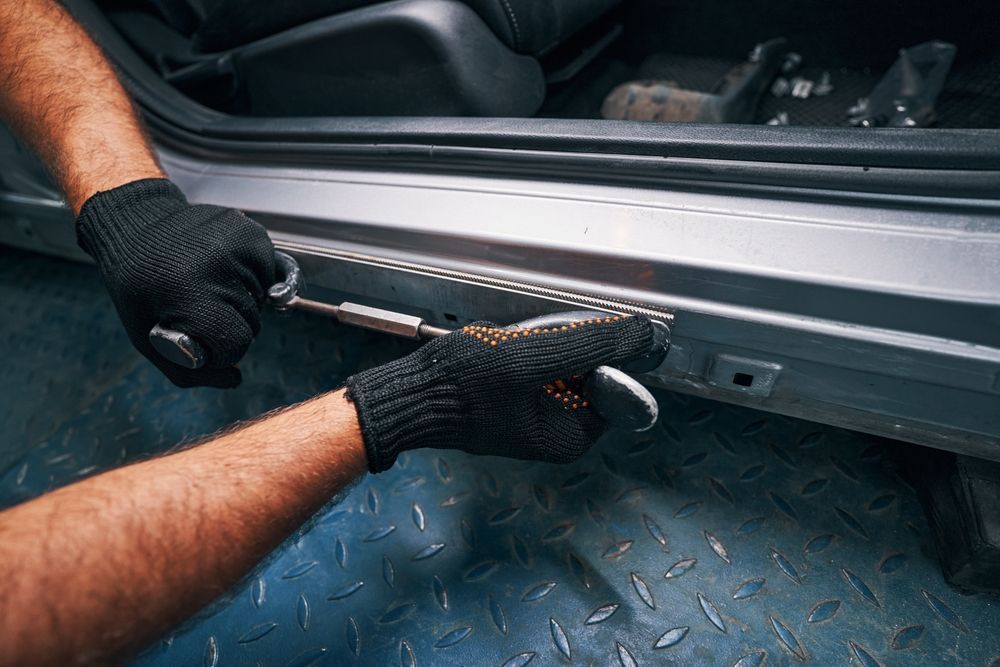
Computerized frame measuring mounts sensors at dozens of factory-specified reference points across the vehicle, then compares the actual measurements to the manufacturer's database for your exact make and model. The system detects shifts as small as two millimeters, identifying damage that visual inspection misses, particularly in lower frame rails and rear suspension mounts where impact forces travel through the structure.
After frame straightening completes, you'll notice the vehicle tracks straight without pulling to one side, doors close with the same effort they required when new, and tire wear patterns return to normal rather than showing premature edge wear caused by misaligned suspension geometry. Structural welding leaves the frame as strong as the original construction, with welds that meet automotive engineering standards rather than simply holding panels in place.
The process includes alignment verification because even a perfectly straightened frame won't perform correctly if suspension components mount at incorrect angles. Kirkman's Auto Body & Collision documents all measurements before and after repair, creating a record that confirms the structure meets safety standards and retains resale value.
What Drivers Ask About Structural Repairs
Collision damage raises questions about structural integrity and whether repairs can truly restore safety. The following addresses concerns about frame straightening and verification processes used in Tuscaloosa.
How does computerized measuring differ from visual frame inspection?
Computerized systems measure the distance between factory reference points to within two millimeters, detecting frame damage that appears invisible during visual inspection, particularly in lower rails and cross members where impact forces concentrate.
What happens if the frame cannot return to factory specifications?
If pulling forces cannot restore the frame within tolerance, or if metal has torn rather than bent, replacement sections are welded into place using the same structural steel and welding procedures the manufacturer specified during original assembly.
Why does unibody construction require different repair methods than traditional frames?
Unibody vehicles distribute crash forces through the entire shell rather than isolating them in a separate frame, so repair must address the integrated structure and restore precise dimensional relationships between dozens of mounting points rather than simply straightening two parallel rails.
How does frame damage affect vehicle safety after the collision?
Misaligned frames change suspension geometry, causing uneven tire wear and unpredictable handling, and compromised crumple zones may not absorb impact forces correctly in future collisions, reducing occupant protection.
What documentation confirms frame straightening met safety standards?
Computerized measuring systems generate printed reports showing before and after measurements at every reference point, creating verification that the frame returned to manufacturer specifications rather than relying on subjective visual assessment.
Kirkman's Auto Body & Collision provides detailed structural assessments that document frame condition and repair specifications. Request a computerized frame measurement to determine what corrections your vehicle requires after collision damage.